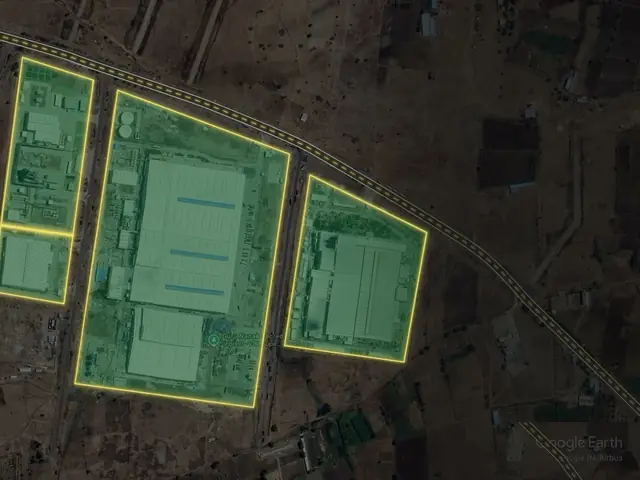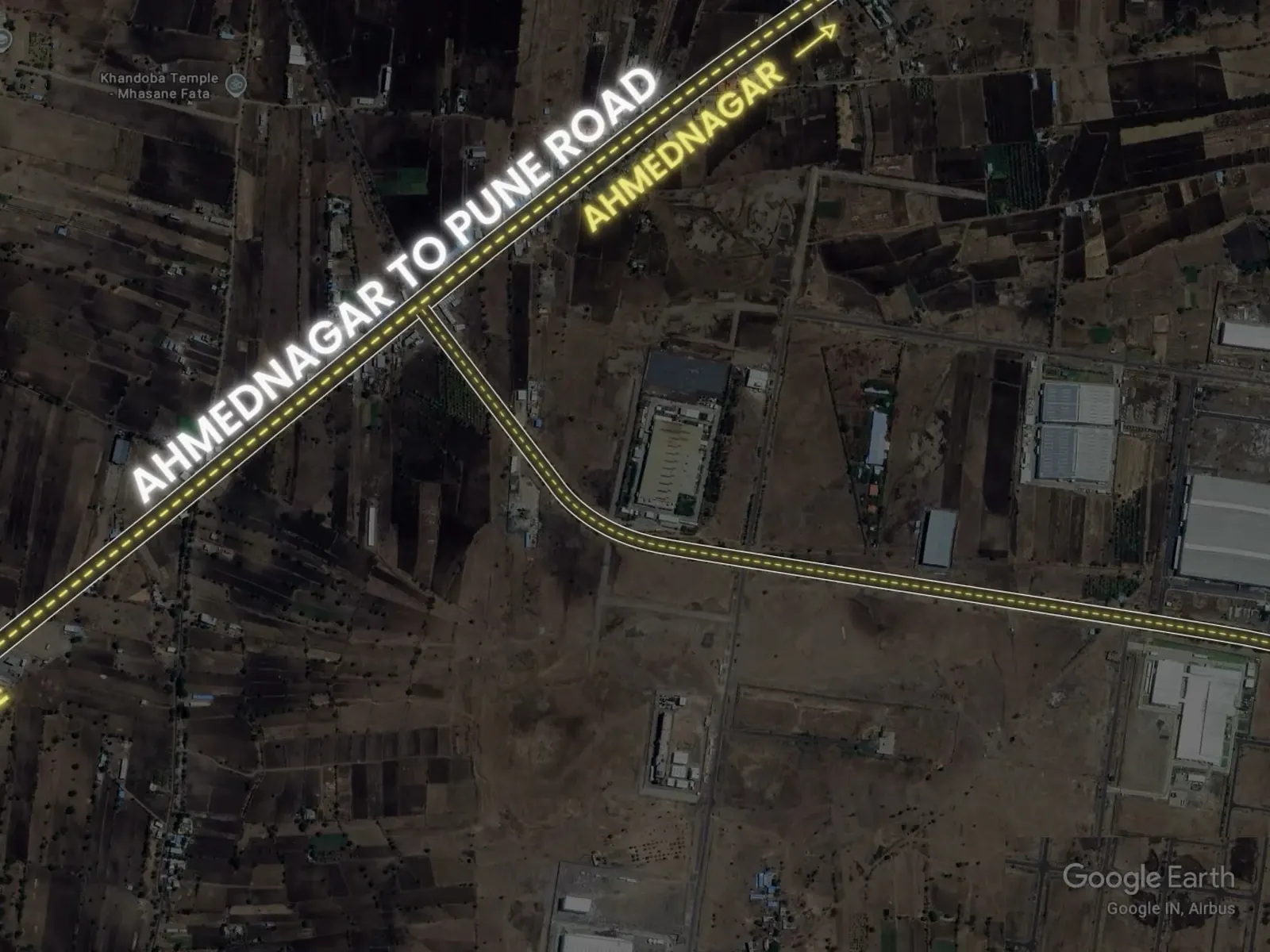
Drive out of Ahilyanagar on the Pune road, past Kedgaon, and before long the farmland on either side starts sharing the view with compound walls and factory gates. That's the Supa belt, in Parner taluka. If anyone has offered you a plot on this side of the district lately, they've almost certainly mentioned it in the first five minutes.
We'll soon be listing a plotted layout near Supa MIDC ourselves, so we've spent a good few evenings reading what's actually on record about the area, as opposed to what gets said on site visits. This post is what we found. Each company we name comes from its own website, from MIDC or from a newspaper, and we've linked the source so you can check it. Where we couldn't confirm a claim, we've left it out, even when we'd heard it more than once.
What Supa MIDC is
MIDC is the Maharashtra Industrial Development Corporation. It's the state body that takes land for industry, builds the internal roads and water lines, and then gives plots to companies on lease. When people here say "Supa MIDC" they usually mean the whole cluster. On paper it's more than one area. MIDC's online land allotment system lists three industrial areas at Supa under its Ahilyanagar region. One is called Supa Parner, another Supa Parner Industrial Park, and the third Additional Supa Parner Phase 2.
The names matter more than they seem to. A plot "near MIDC" could be a short walk from one of these areas or a fair drive from another, and the company addresses further down use the same names. When a seller says "near MIDC", ask which one, and then look at it on a map yourself.
The industry here isn't new. The first industrial area at Supa came up in 1978, according to a 2019 report in the Indian Express. What has changed in the last few years is the size of the companies arriving.
The Japanese industrial park
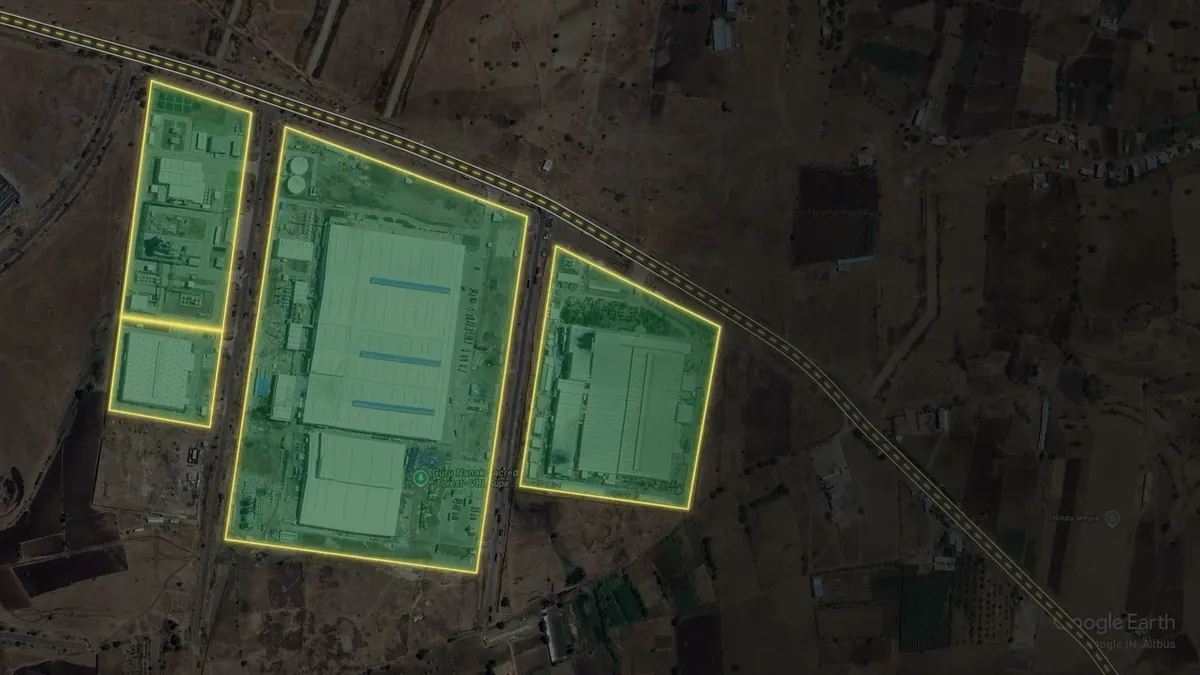
You'll hear a lot about "the Japanese park". It's real. MIDC's own brochure on Maharashtra and Japan says that under an agreement between the Japan External Trade Organization (JETRO) and MIDC, a park only for Japanese companies has been created in the Supa Parner industrial area. You can read it in MIDC's Maharashtra Japan brochure.
It wasn't a quick success, and we think buyers should know that part too. The same 2019 Indian Express report described a 230 hectare park for Japanese firms that was still waiting for its first investor. Anyone who bought land nearby in 2015 expecting factories within a year or two waited a long time.
Things did move after that. Mitsuboshi Belting, a Japanese maker of belts for cars and motorcycles, announced in 2023 that the new plant of its Indian company had started operations. The company's India profile page gives the address as Plot J-241, Supa Parner Industrial Park. DIC Corporation, another Japanese group, said in a March 2024 release that its Indian subsidiary Ideal Chemi Plast had started production of coating resins in the "Supa Japanese Industrial Zone" on 15 February 2024, on a site of 48,500 square metres.
Other companies with plants at Supa
These are the names we could confirm from the companies' own pages, their annual reports or established news outlets. It isn't a complete list of every unit in the area. It also doesn't tell you how many people each one employs, because that isn't published in one place.
- Carrier Midea India says on its About page that its manufacturing facility is at Supa, and its address is Plot A-5 in the Supa Parner industrial area. When Midea laid the foundation stone for a technology park here in November 2018, its press release said the park was on 68 acres and that one unit would be for GMCC, the group's compressor company. The Times of India reported the planned investment as ₹1,350 crore over five years.
- Uno Minda, the auto parts group, says on its alloy wheel division page that it set up a plant in Supa for two-wheeler alloy wheels, with a yearly capacity of about 3.6 million wheels.
- Varun Beverages, the PepsiCo bottler, wrote in its 2024 annual report that it had commissioned a new greenfield plant in Supa, Maharashtra.
- Amber Enterprises, which makes air conditioners and their parts for other brands, describes its Supa plant in its annual report, where it says the first phase there began with heat exchangers.
- DriveSys Systems, a subsidiary of ZF Steering Gear (India), took over a factory lease at Supa Parner Industrial Park from MIDC, as Autocar Professional reported.
You'll hear other names locally, and some of them are probably right. We've kept to what we could check. If a seller's brochure lists a company, it's fair to ask where they got it from, and to look for the company's own address before you believe it.
Where it sits between Ahilyanagar and Pune
Supa is on the road between Ahilyanagar and Pune, in Parner taluka of Ahilyanagar district, and much closer to Ahilyanagar city than to Pune. The Times of India's 2018 report put it at about 80 km from Pune. We'd rather not quote a single figure for the distance from Ahilyanagar, because it depends so much on where in the city you start and which part of the belt you're going to.
Our advice is to drive it yourself at the hour you'd actually travel. Leave Savedi or Tapovan Road at 8 in the morning on a weekday and note the time it takes to reach the plot. Then do the trip back at 6 in the evening. Shift changes put a lot of two-wheelers and company buses on this road, and that's what your tenants or your family will live with, not the empty road you saw on a Sunday visit.
What the factories mean for rent
This is the part where buyers get oversold. A plant with hundreds of workers does create demand for rooms nearby, and you can see it in the rows of small rooms that come up behind houses in villages close to any industrial area. But there's no published rent data for the villages around Supa that we'd trust. Anyone quoting you a "guaranteed rent" for a plot that doesn't have a house on it yet is guessing.
It helps to think about who actually rents near a factory. Many shop floor workers are on contract and move when the contract ends, so they want a cheap room close to the gate and they don't stay for years. Supervisors and engineers often have families and look for a proper house, though some of them would rather live in Ahilyanagar city and take the company bus. Senior managers at the bigger companies may well choose Pune or the city. None of that is bad news. It means the kind of building you put up decides who'll rent it.
Before you count on rent, ask around. Talk to two or three people who already let rooms in the village you're looking at. Ask what they charge, how long rooms stay empty between tenants, and whether their tenants work at one company or several. If everyone works at one plant, your income depends on that plant's next five years.
What it means if you're buying a plot
Industry nearby can lift land prices, and it can also make a plot harder to live on. The same truck traffic that tells you an area's busy also means dust and noise near the main road. We've written a separate post on buying a plot near an industrial area that goes through the practical checks one at a time, from water to pollution. For Supa in particular, there are three things worth checking before anything else.
First, find out the zone. Land close to an MIDC area can be marked for industry or for future expansion, and MIDC already lists an "Additional" Supa phase of its own. Ask the seller for the zone certificate, and ask your lawyer to confirm whether the land is notified for acquisition. Second, check the layout's papers the way you would anywhere else, starting with the 7/12 and the ferfar entries. Our post on checking a plotted NA layout before you pay a token has the full list. Third, compare prices properly. Plots here get quoted per guntha, per square foot and sometimes per acre, and it's easy to be fooled by the unit. There's a worked example in our post on guntha and sq ft pricing.
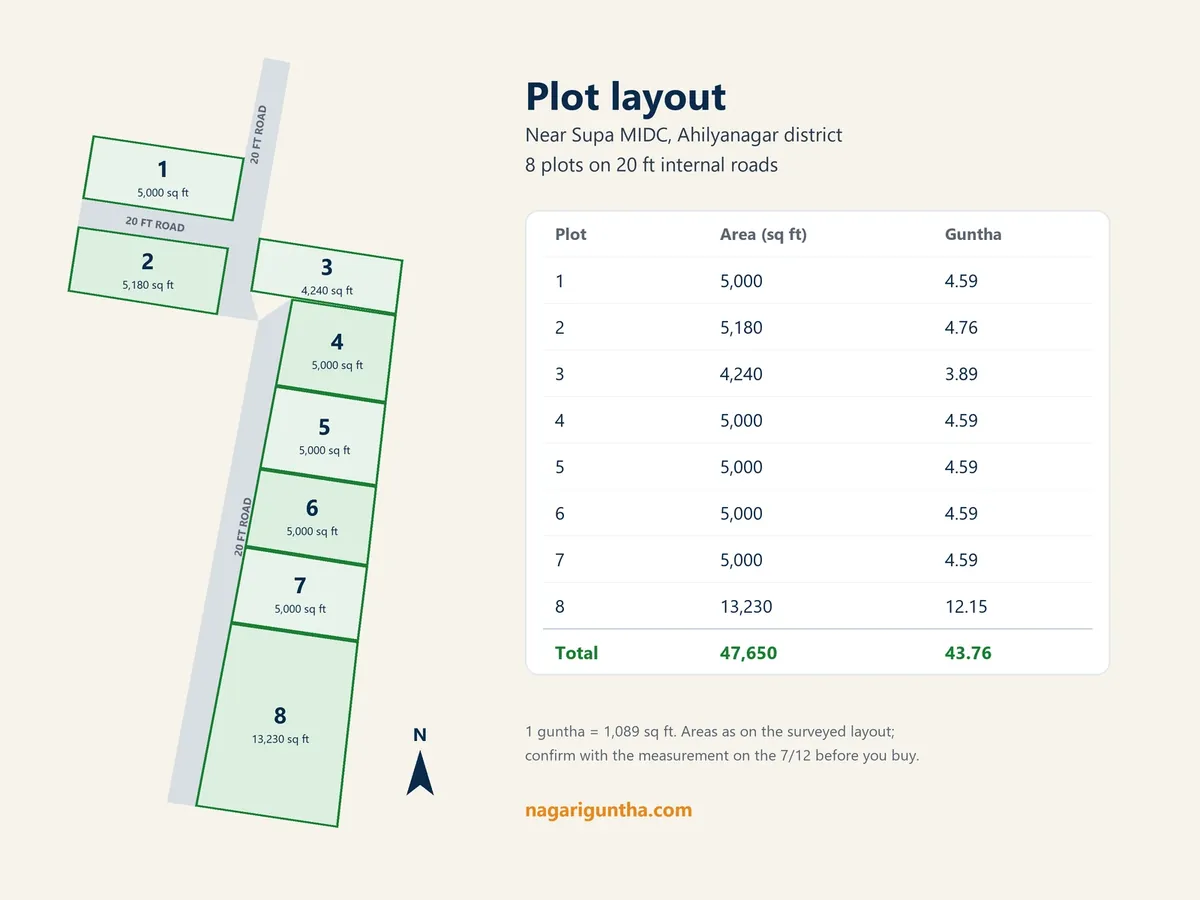
Living here, day to day
For a family, the practical questions are the usual ones, only sharper because you're further from the city. How far is the nearest school your children could actually get into? Where's the nearest hospital with a casualty ward open at night? Is there a bus, or will every trip mean the bike or the car? The answers change from village to village, so visit on a weekday, have tea at the stall near the bus stop, and ask.
Water deserves its own visit in April or May, when wells are at their lowest. Ask the gram panchayat what supply the village gets and how often, and ask neighbours whether they buy tankers in summer. We'd rather you hear it from them than from us, and certainly before you hear it from a seller.
Shops and services are thinner out here than in Savedi, and you'll find yourself driving into Ahilyanagar for bigger errands. Some families like that trade, with more space and quieter evenings. Others find it wears thin by the second monsoon. Spend a weekend in the area before you decide which kind of family you are.
The honest pros and cons
On the plus side, there are jobs nearby and a highway in both directions. Companies have put real money into plants here, and they're unlikely to walk away from that quickly. Shops and services tend to follow the people who work in a place.
On the other side, the area depends on a handful of large employers. The Japanese park took years to fill, and industrial traffic isn't pleasant to live next to. Prices also tend to run ahead of what's actually built, because everyone has heard the same story about the next big factory. None of this means you shouldn't buy. It means you should buy with the papers in order, at a price that makes sense even if the next factory takes five years instead of one.
Questions people ask
Is Supa in Pune district or Ahilyanagar district?
Ahilyanagar district. Supa is in Parner taluka. It's on the road to Pune, which is why people sometimes describe it as near Pune.
Can I buy a plot inside the MIDC area?
MIDC gives its plots to industries on lease, through its own process on land.midcindia.org. A plotted layout sold by a private owner sits outside MIDC land, usually in a village nearby.
Will land prices near Supa keep rising?
We don't know, and nobody honestly does. Look at what's built and running today, not at what's announced, and only pay a price you'd still be happy with if growth is slow.
Do I pay brokerage if I buy through Nagari Guntha?
No. Buyers pay us zero brokerage. Read how zero brokerage works if you'd like the details.
Your next step
Pick one plot you're considering near Supa MIDC and download its 7/12 using our step-by-step guide. Then run the price through the stamp duty calculator so you know the full cost, and if you're buying from abroad, read our NRI page for the extra steps. Message us on WhatsApp with what you found, and we'll tell you what we'd check next.
Written by the Nagari Guntha team in Ahilyanagar: a DPIIT-recognised property company with zero brokerage for buyers. We write about what buyers and owners ask us every day. About us