The pitch for a plot near an industrial area writes itself. There are thousands of jobs down the road, workers who need rooms, and a highway already built. Some of that is true. But a plot next to a factory is also a plot next to its trucks, and to whatever comes out of its chimney, and buyers tend to notice that only after they've moved in.
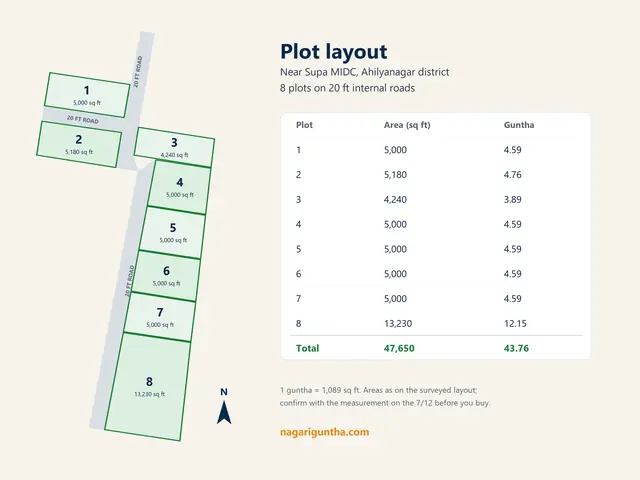
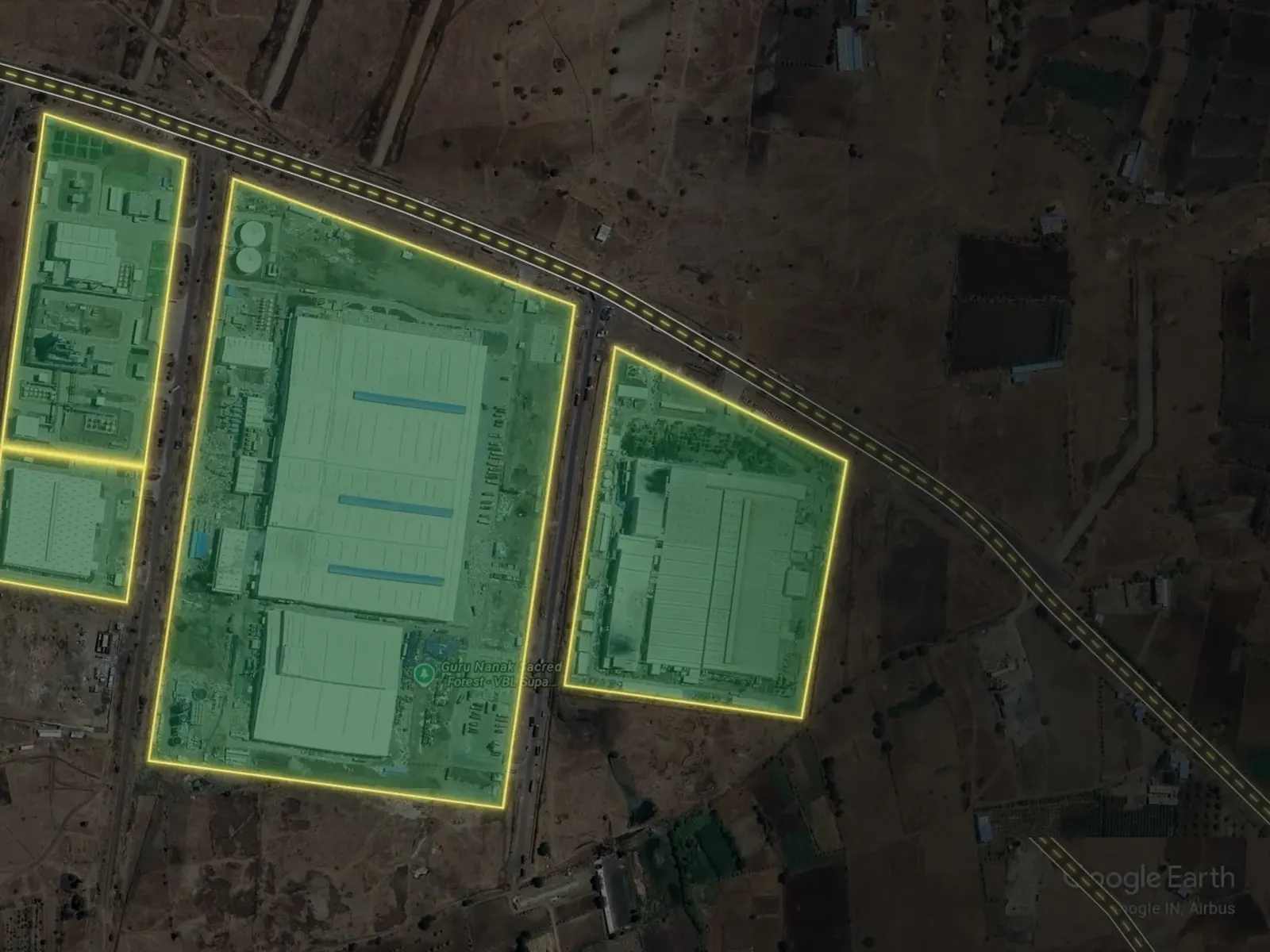
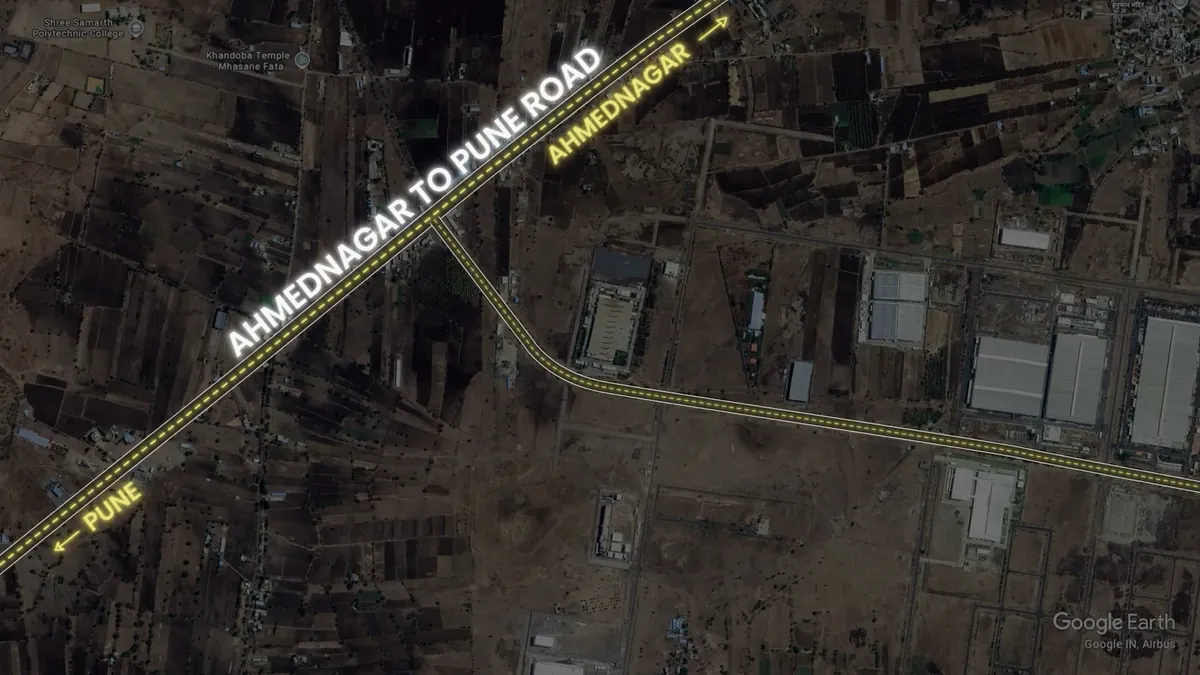
We're writing this with the Supa MIDC belt on the Ahilyanagar to Pune road in mind, since we'll soon list a plotted layout there. The checks apply near any MIDC area in the district, though. Our guide to Supa MIDC covers which companies are there and what's on record about them.
Water, asked about in summer
A layout visited in August looks green and well watered. Visit again in April or May. Ask the seller exactly where the plot's water will come from. Is there a gram panchayat supply line along the layout's road, or a borewell, or is the plan to buy tankers? A common borewell shared by a whole layout needs someone to run it and pay its electricity bill, so ask who that'll be.
Then ask the neighbours, not the seller. People living in the nearest village will tell you how many hours of supply they get, and whether tankers come in summer. If the village already buys tankers, a new layout next door won't fix that.
Near an industrial area there's one more question. Do the factories draw on the same groundwater? We can't answer that for any particular layout, and it isn't easy to find out. Ask at the gram panchayat office, and treat any promise of "plenty of water" with some suspicion until you've seen it in May.
Power, and what an MSEDCL connection involves
Electricity in most of Maharashtra, including Ahilyanagar district, comes from MSEDCL, which a lot of people still call MSEB or Mahavitaran. You apply for a new connection online on MSEDCL's web self service site, and you can track it on the same system.
The application is the easy part. What matters on an open plot is how far away the nearest pole and transformer are. If the developer has already brought the line to each plot, a new connection is fairly simple. If the nearest pole is a long way off, someone has to pay for the line to be extended, and the transformer may not have spare capacity once the layout fills up with houses. Ask the developer in writing whether the electrical work inside the layout is done and approved by MSEDCL. If you're unsure, the local MSEDCL sub-division office can tell you what a connection at that spot would need.
Don't assume that because the factory next door has power, your plot will get it easily. Large factories often have their own supply arrangements, and that line may not help a house at all.
The approach road and the trucks on it
An industrial area brings good roads to the factory gates. It doesn't always bring them to your layout. Check the road from the highway to the layout gate the way you'd check the plot itself. Is it a public road? How wide is it really, and who repairs it after the monsoon? If it's a farm track or it crosses private land, read the section on roads in our post on checking a plotted layout before you pay a token.
Trucks are the other half of this. A plot right on the main road looks convenient on paper. Living there means container trucks and company buses at every change of shift, from early morning to late at night. A plot one lane back is often a better home, and it's usually a calmer place to rent out as well.
How close is too close to the factory wall?
There's no single distance we can give you, and we'd be suspicious of anyone who offers one. What's acceptable depends on what the factory makes. A plant that assembles appliances is a very different neighbour from a chemical unit or a foundry.
India's pollution control boards sort industries into colour categories by how polluting they are, with red for the most polluting. In Maharashtra that's the job of the Maharashtra Pollution Control Board, MPCB, and each unit near a plot needs its consent to operate. Ask which units are within a kilometre or two of the layout and what they make. Then look them up on the MPCB website.
On the visit, use your own senses. Stand on the plot for half an hour in the morning and again in the evening. Is there a smell when the wind turns? A hum from a compressor house? Dust on the leaves of the trees by the road? Notice which way the wind usually blows, too. If you're downwind of a chimney for most of the year, you'll notice it more than the distance on a map suggests.
Zoning, and the risk of acquisition
Land beside an industrial area is often in a zone planned for industry, or kept as a buffer. Ask for the zone certificate from the planning office and have your lawyer read it. A residential layout in a zone that doesn't allow homes is a problem that no paper from the seller will fix.
Also ask whether the land, or the land around it, has been notified for acquisition. MIDC does expand its areas over time, and near Supa it already lists an "Additional Supa Parner Phase 2" as a separate industrial area. Land that's being acquired may be compensated, but not on terms you'd choose. Your lawyer can check for notifications as part of the title search.
Drainage, and permission to build
Layouts out of town rarely have an underground sewer. Most houses near an industrial area end up with a septic tank and a soak pit, which needs space on the plot and a sensible distance from any well or borewell. Ask the developer where the layout's rainwater and waste water go. Look at the slope of the land on a wet day, if you can, because water from a factory compound or a highway drain has to go somewhere, and you don't want it to be your plot.
Then ask who gives permission to build a house on this plot, and what they'll want to see. Depending on where the land is, that may be the gram panchayat, a planning authority or another office. Your lawyer can tell you, and it's worth knowing before you buy, because a plot you can't get a building permission for is only good for sitting on. If you plan rental rooms, ask about that specifically too.
Lights, safety and the evening walk
Industrial roads are busy during shifts and very quiet in between. Walk from the layout to the nearest bus stop after dark, once, before you commit. Are there street lights? Is anybody else around? Would you be happy for your daughter or your tenant to make that walk at 10 at night? It's a small test, and it tells you a lot about whether the plot will work as a home and not only as an investment.
Rent and resale, and who'll want your plot later
The case for buying near industry is demand from the people who work there. It's real, but it's narrower than it sounds.
Workers on contract want a cheap room close to the gate, and they move on when the contract ends. That's demand for small rental rooms, which can work if you build them and look after them, but it does little for an open plot you plan to sit on. Supervisors and engineers with families want a decent house with water and a school nearby. Senior staff often live in the city and take the company bus. Think about which of these people you'd actually build for, and whether the plot suits them.
Resale works the same way. When you sell, your buyer will mostly be someone with a reason to be in that area, which usually means someone who works there or who's investing because of the factories. If one big employer cuts back, your tenants and your buyers can thin out at the same time. We don't say that to put you off. It's why a plot near several different employers is safer than one that depends on a single plant.
The honest pros and cons
In favour, jobs nearby keep people coming to the area. Industry usually brings better roads and power to the region over time, and shops and clinics tend to follow the people who work there. Land a little further out can still be priced sensibly.
Against that, truck traffic and dust become part of daily life, and water can be tight in summer. Demand depends on a few employers, and plans announced for an area can take years to arrive. The Japanese industrial park at Supa was reported in 2019 to be still waiting for its first investor, years after it was planned, and a buyer who'd counted on quick growth would've waited a long time.
A short checklist for the visit
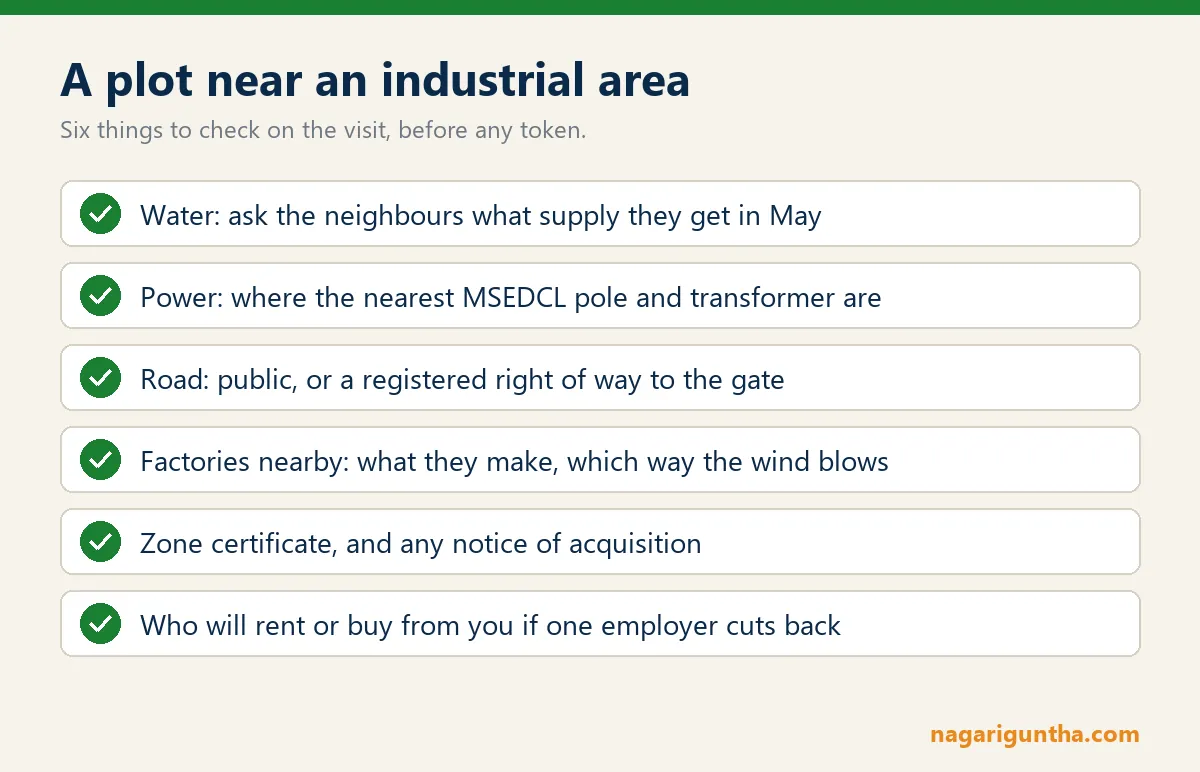
- Get the 7/12, the NA permission and the sanctioned layout plan before you pay anything.
- Ask where the water comes from, and confirm it with neighbours in the nearest village.
- Find the nearest MSEDCL pole and transformer, and ask what a connection would need.
- Walk the approach road and check that it's public or has a registered right of way.
- Note each factory close by and what it makes, and which way the wind blows.
- Have your lawyer read the zone certificate and check for any acquisition notice.
Our site visit checklist and document checklist cover the rest.
Questions people ask
Is it safe to build a house right next to an MIDC boundary?
It depends on what's on the other side of the wall and on the zone your plot is in. Find out both before you decide, and ask your lawyer about the zone.
Will rent near a factory cover my loan EMI?
Don't plan on it. Rent near industrial areas depends on who's hiring, and rooms can sit empty. Work out your EMI on the EMI calculator on the assumption that you'll pay it yourself.
Can I get a home loan for a plot near an industrial area?
Ask your lender. In our experience banks look hardest at the plot's papers, so a clear title, the NA permission and a sanctioned layout come first. Our loans page has more.
Do you charge buyers brokerage?
No. Buyers pay us zero brokerage.
Your next step
Before your next visit, write down the six checks above and take them with you. Ask the seller first and the neighbours after that. Then check with MSEDCL and the gram panchayat, and if the answers line up, send us the papers on WhatsApp and we'll look at them with you.
Written by the Nagari Guntha team in Ahilyanagar: a DPIIT-recognised property company with zero brokerage for buyers. We write about what buyers and owners ask us every day. About us